The case for stainless steel domestic water heaters
Inspite of the increased rate tag, stainless steel h2o heater tanks are generally extra charge helpful when lifecycle expenses are in comparison and should really be introduced as these types of.
Domestic h2o heating appliances are the actual foot troopers of the mechanical planet. They are continuously exposed to a extremely hostile setting and their hard work is generally disregarded. On the drinking water side of the heater, minerals, oxygen, chemical substances and sediment can all assault. On the combustion facet, substantial temperatures, thermal stress and flue gasoline condensate can all create havoc with the resources.
When it comes to servicing, domestic scorching water (DHW) heaters are nearly overlooked. Most house owners acquire their water heaters for granted and only discover them when they are not performing or are leaking. Verify the anode rod? Flush out the sediment? Have a maintenance software? Ignore it, we are not bothering with that. It is no speculate that most DHW appliances have quite quick daily life spans.
Relevant: Mechanical room retrofit
Could this quick lifespan be enhanced? Applying DHW heaters designed of stainless steel is one particular way to make improvements to everyday living expectancy. Stainless steel is a potent, strong materials that can greater stand up to h2o facet and fireplace facet attacks, providing the heater a preventing chance to offer a prolonged provider existence. Stainless steel’s only serious downside is its substantial materials and fabrication expense. In the ultra-aggressive DHW heater current market, this high expense is a large problem to prevail over.
WHAT IS STAINLESS Metal
Stainless metal is a generic title for iron alloys with a bare minimum of 10.5 for each cent chromium. Other things this kind of as nickel, molybdenum, titanium, and carbon can also be extra to deliver corrosion resistance, energy and formability. There are several various mixtures of these diverse metallic alloys that create a certain “type” and “grade” of stainless metal. Just saying one thing is created of stainless steel does not inform the complete story.
If another person mentioned “Get me some plastic pipe” what would you carry? PEX, CPVC, polyethylene? All of these are “plastic” pipes, but all have pretty diverse qualities, strengths and purposes. It is the identical with stainless steels. There are over 150 grades of stainless steel, all possessing very different attributes and purposes. Stainless steel employed in domestic sizzling h2o heaters are most typically produced from only a few grades of stainless metal, usually sorts 304, 316L, 316Ti and 444.
The variance amongst these grades is in what concentration of alloys is in them. All “300” grades of stainless steels include around 18 for every cent chromium and 10 for each cent nickel. Both of those of the 316 grades also contain two for each cent molybdenum, and 316Ti quality adds a person for every cent titanium to the mix. The molybdenum provides 316 grades far better general corrosion resistant homes than 304 quality, particularly larger resistance to pitting and crevice corrosion in chloride environments. Titanium in the 316Ti quality offers it exceptional formability and strength. 444 quality does have chromium and molybdenum, but it does not have any nickel. Typically speaking the a lot more nickel, molybdenum and titanium there is in the mix, the much better the corrosion resistance and toughness, but also the greater the cost. Just take a nearer appear at the grade when another person states they have a “stainless steel” drinking water heater because they are not all the similar top quality
Using STAINLESS Steel IN DHW HEATERS
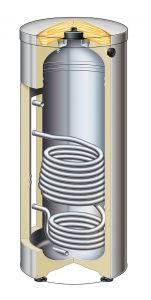
Stainless steel oblique h2o heater.
Stainless metal is made use of in all various varieties of h2o heaters. It is most usually found in use in indirect DHW heaters and in condensing tankless h2o heaters. Oblique water heaters integrate an inside warmth transfer coil related to a boiler or a photo voltaic collector loop. They are much more frequent in Europe than in Canada due to the predominance of hydronic and solar drinking water heating units in Europe.
Stainless steel building can make up a massive portion of these European indirect marketplaces. In Canada, equally stainless steel and glass lined metal oblique tanks are available, with stainless steel tanks normally carrying the larger price tag. In non-condensing tankless water heaters the heat exchangers are generally constructed of copper. With the force to higher performance condensing units, heat exchangers are both all stainless steel, or a mix of a major copper and a secondary stainless metal warmth exchanger. The immediate-fired tank sort h2o heater is continue to king in Canada’s water heater industry. Carbon steel with glass linings dominates this sector.
Stainless steel is typically made use of in tankless or direct-fired tank condensing h2o heaters.
When squeezing extra performance out of these appliances, the flue gases have to be cooled under the dew level to release the latent warmth of the gasoline. The resulting condensate is in essence distilled h2o vapour from the gas combustion products and solutions and it has a incredibly reduced pH and superior acidity. This acidic condensate h2o have to be disposed of by piping it to a drain, but the larger concern is its corrosive impression on the water heater heat exchanger surfaces.
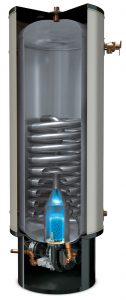
Stainless metal direct fired water heater.
Heat exchangers designed of regular metal or copper have a more durable time standing up to this flue gasoline condensate for extended. Stainless steel is a fantastic material choice thanks to its substantial corrosion resistance and overall flexibility, which provides it the ability to be shaped into intricate heat exchanger designs. There are at the moment quite a few models of condensing tankless h2o heaters utilizing stainless steel warmth exchangers. This enables them to motivate total flue fuel condensing in the heat exchanger, and effects in significant EF ratings of up to .97.
Tank kind h2o heaters with condensing technological know-how are also now beginning to be employed a lot more usually, especially with variations to some creating codes necessitating increased water heater efficiencies. There are two common forms of design observed in this industry. Glass lined tanks are getting made with fully submerged secondary condensing heat exchangers. Each the outside (water side) and within (fireplace aspect) of the warmth exchanger coil is glass lined, with the glass lining on the within supplying protection versus flue gasoline condensation. Tank models with all stainless steel tank and coil design are not as typical, but there are quite a few obtainable with this kind of all-stainless building.
The glass lined tanks do have a lower first price tag and only time will inform how nicely the warmth exchangers stand up to the aggressive condensing natural environment. These new condensing tank form water heaters are capable to achieve greater efficiencies than common immediate-fired drinking water heaters, with thermal efficiencies among 90 and 96 for every cent. As governments force drinking water heater efficiency restrictions larger and larger, we are sure to see much more progressive substantial performance tank form h2o heaters come to the industry.
Positive aspects OF STAINLESS Metal Design

New and aged anode rods.
Wanting additional closely at tank type drinking water heaters, you can find the two glass lined and stainless metal construction for most styles of direct-fired, indirect inner coil and straight storage tanks.
So, what are the positive aspects of stainless metal over glass lined? How can you influence prospects to make investments much more in a stainless metal tank? The major advantage of stainless metal is its all-natural resistance to corrosion from contemporary h2o resulting in a a great deal longer company lifetime. Owing to their composition of corrosion resistant metal alloys, stainless steel tanks are more robust and extra long lasting in contrast to glass lined types. Stainless steel drinking water tanks have a protective oxide barrier on the h2o facet that helps prevent corrosion the natural way.
On the other hand, glass lined tanks count on the glass lining to offer a barrier among the carbon metal and the h2o. Offered the chance, oxygen and chemicals in the drinking water will assault the metal and promptly corrode it. As it is very just about impossible to implement any protective coating flawlessly (devoid of microscopic cracks or pinhole defects in the protecting layer) glass lined tanks include a sacrificial anode rod set up inside of the tank.
Relevant: How to resolve installation faults
The sacrificial anode rod will turn into depleted above time and when this method has finished, electrolysis will start out to consume away at the uncovered parts of metal on the tank inside. How quick the anode depletes will rely on the h2o good quality, and the water use level. The sacrificial anode commonly lasts from 3 to five yrs and it is probable to exchange the anode to avert even more destruction.
In truth, the periodic check out and replacement of the anode is typically neglected and the tank develops a leak, resulting in the whole appliance becoming replaced. Not like glass lined drinking water tanks, stainless steel tanks do not require a “sacrificial anode” in buy to avoid corrosion on its floor. This implies there is no need to have for inspection or substitution of anodes, saving time and price tag in servicing above the existence of the drinking water heater.
Owing to this increased longevity and resistance to corrosion, you will usually find that stainless steel tanks have a for a longer period guarantee, with some makers offering lifetime warranties on tanks.
Stainless steel h2o tanks also have the advantage of getting lighter bodyweight when compared to glass lined tanks producing them a lot easier to transportation, cope with and install. The wall thickness of stainless steel utilized in tanks is ordinarily much thinner than a equivalent steel tank with glass lining. Incorporate on best of this the pounds of the glass lining alone, and the weight of a glass lined tank is often significantly far more.
Stainless steel tanks call for fewer interest when being transported, compared with glass lined tanks, which have the fragile glass lining that can be destroyed when in transit. If the glass lining of a tank is broken or cracked because of to tough dealing with in the course of transportation or set up, it may possibly not be identified until the tank suffers untimely failure.
Stainless metal tanks are typically able to stand up to greater temperature drinking water than glass lined tanks, with temperatures in excess of 180F not presenting any issues. Some glass lined tanks are prone to anxiety when subjected to elevated temperatures, major to a better risk of problems to the glass lining. Temperatures above 160F can become an situation for some glass linings. Purposes this kind of as solar h2o heating and some business-industrial programs can see high temperature h2o storage needs.
It is sensible to verify with glass lined tank companies to find out what the advisable greatest operating temperature is. Stainless metal tanks are usually a much better preference for large temperature apps.
There is no question that the initial expense of stainless metal tanks is better than glass lined water tanks. But the lifecycle cost of glass lined drinking water tanks may well turn into bigger for the good reasons famous below. When those people lifecycle costs are in contrast, stainless steel tanks are generally much more cost powerful in the very long operate and should really be offered as such to clients.
Robert Waters is president of Solar Drinking water Products and services Inc., which gives training, education and learning and help providers to the hydronic sector. He is a mechanical engineering technologist graduate of Humber College and has about 30 yrs encounter in hydronic and photo voltaic drinking water heating. He can be attained at [email protected].
Ad