Popular Patterned Concrete Driveway Colours
Table of Contents
Patterned concrete continues to grow in popularity as a durable and visually striking choice for driveways across the UK. Its ability to mimic high-end materials like cobblestone, slate, or brick without the same cost or maintenance has made it a favourite among homeowners looking to add kerb appeal. But while pattern plays a major role in the finished look, colour is what truly brings a driveway to life. The colour you choose can influence the entire tone of your property exterior, making it important to get it right. Some colours reflect a traditional British style, while others suit newer builds or bold modern renovations.
Why Colour Matters in Patterned Concrete Driveways
Colour sets the tone for your driveway and ties it into the rest of your home’s design. A well-chosen shade can enhance the look of brickwork, match roof tiles, or contrast tastefully with window frames and doors. It’s not just about looks either. Some colours show dirt and stains more than others, which is worth considering if your driveway gets regular foot traffic, oil drips, or is under trees. The long-lasting pigments used in concrete colouring are designed to stand up to weathering, but certain tones will fade more gracefully over time than others.
Traditional Reds and Terracottas
For period properties and homes with a classic red brick finish, earthy reds and warm terracotta tones remain a go-to choice. These colours mimic traditional clay paving bricks and blend well with older homes where authenticity and heritage style are important. They add warmth to a front garden area and are particularly popular in towns and cities with rows of Victorian and Edwardian terraces. When combined with a herringbone or cobblestone pattern, red-toned concrete can create the effect of old, weathered brickwork while benefiting from the strength and uniformity of concrete.
Sophisticated Charcoals and Greys
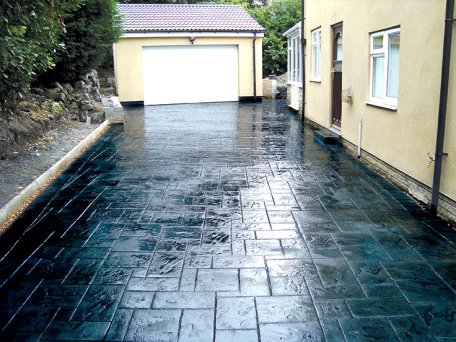
Modern homes and newer builds tend to lean towards cooler colour palettes, and charcoal or mid-grey remains one of the most requested shades for patterned concrete driveways in the UK. It brings a sense of sophistication and clean lines, making it ideal for properties with crisp render, slate roofs, or dark window frames. These darker tones contrast well with white or cream exterior walls, and they’re also effective at hiding tyre marks and minor oil stains. For homes aiming for a contemporary finish, a deep grey with a slate or ashlar pattern gives a sleek, architectural look.
Natural Stone-Look Browns and Buffs
Neutral tones like sandstone, buff, and light brown work well in rural settings or with homes that use natural stone, render or timber cladding. These colours aim to reflect the look of natural flagstone, limestone, or aged sandstone and are often used in countryside villages or suburban areas looking for a softer finish. The warmer tones blend into surrounding planting and don’t overpower a traditional landscape. Patterns like York stone or ashlar slate pair particularly well with these colours, giving a natural appearance while maintaining the hard-wearing benefits of patterned concrete.
Two-Tone and Shaded Effects
Some homeowners opt for a blended or two-tone finish to add depth and realism to their patterned concrete. This is often achieved by using a base colour and then applying a release agent in a secondary tone that settles into the patterned impressions. For example, a light buff base with a charcoal release agent can create the illusion of aged stone with natural variation. These dual-colour finishes help break up large areas of concrete and prevent the surface from looking too flat or artificial. They are especially effective on larger driveways where visual interest is needed from a distance.
Soft Creams and Weathered Tones
For homes that need a brighter finish or for driveways shaded by trees or buildings, lighter tones like cream, ivory or weathered beige can be a good choice. These colours help reflect light, making the driveway area feel larger and more open. They pair well with Mediterranean-style planting or homes that feature pale-coloured render. While they can show dirt slightly more easily than darker shades, modern sealants help keep them looking fresh with minimal upkeep. When paired with a subtle stamp pattern like slate or random stone, the overall effect can feel calm and welcoming.
Bold Colours for Statement Driveways
Some homeowners want their driveway to make an impression, and that’s where bolder colour choices come into play. Rich black, deep aubergine, or even shades of forest green are sometimes chosen to suit unique properties or bold landscaping designs. These colours are best used when the home’s exterior has equally bold architectural features, such as coloured cladding or unusual brickwork. In small driveways, a dramatic shade can add personality, while in larger spaces, careful contrast with planting or lighting can soften the overall look. While less traditional, bold coloured concrete can give a property real standout appeal.
Matching Colour with Pattern
While it might be tempting to focus only on the pattern or only on the colour, the real magic of patterned concrete driveways comes from matching both carefully. For example, a cobblestone pattern in charcoal gives a modern urban look, while the same pattern in terracotta leans more rustic and traditional. A York stone pattern in light buff looks like natural Cotswold stone, whereas the same design in grey feels more industrial. The colour highlights the pattern and vice versa, so they need to be considered as a pair during the planning stage.
Considering Your Neighbours and the Street
It’s also worth thinking about how your chosen colour fits in with your neighbourhood. While there’s no requirement to match your neighbours, a driveway colour that complements nearby properties can help boost overall curb appeal, especially if you’re planning to sell. In conservation areas or on listed properties, there may even be local guidelines on materials or tones that can be used. Choosing a colour that fits into the overall character of the street while still reflecting your personal style will ensure your driveway adds value and avoids standing out for the wrong reasons.
Long-Term Appearance and Maintenance
Over time, all driveways are exposed to UV light, rain, and wear from vehicles. Some colours hold their appearance better than others. Charcoals and mid-greys tend to show the least amount of wear, while very pale tones can become discoloured without regular cleaning. Using a high-quality sealer protects the colour and enhances the overall finish, regardless of the tone you choose. Some homeowners choose to reseal every few years to keep the surface looking fresh and to protect against fading. It’s also a good time to reapply colour tints or enhancers if you want to refresh the original tone.
Making the Right Colour Choice for Your Home
When choosing a patterned concrete colour for your driveway, consider the tone of your exterior walls, roofing, and garden features. Think about whether you want the driveway to blend in subtly or stand out as a design feature. Also factor in your home’s age, location and how much light the front of the house receives during the day. For some, a soft sandstone tone will add warmth and harmony. For others, a sharp charcoal might provide the clean contrast they’re looking for. Visiting showrooms or asking to see previous installations from local installers can help you see how different colours look in real-life settings.